
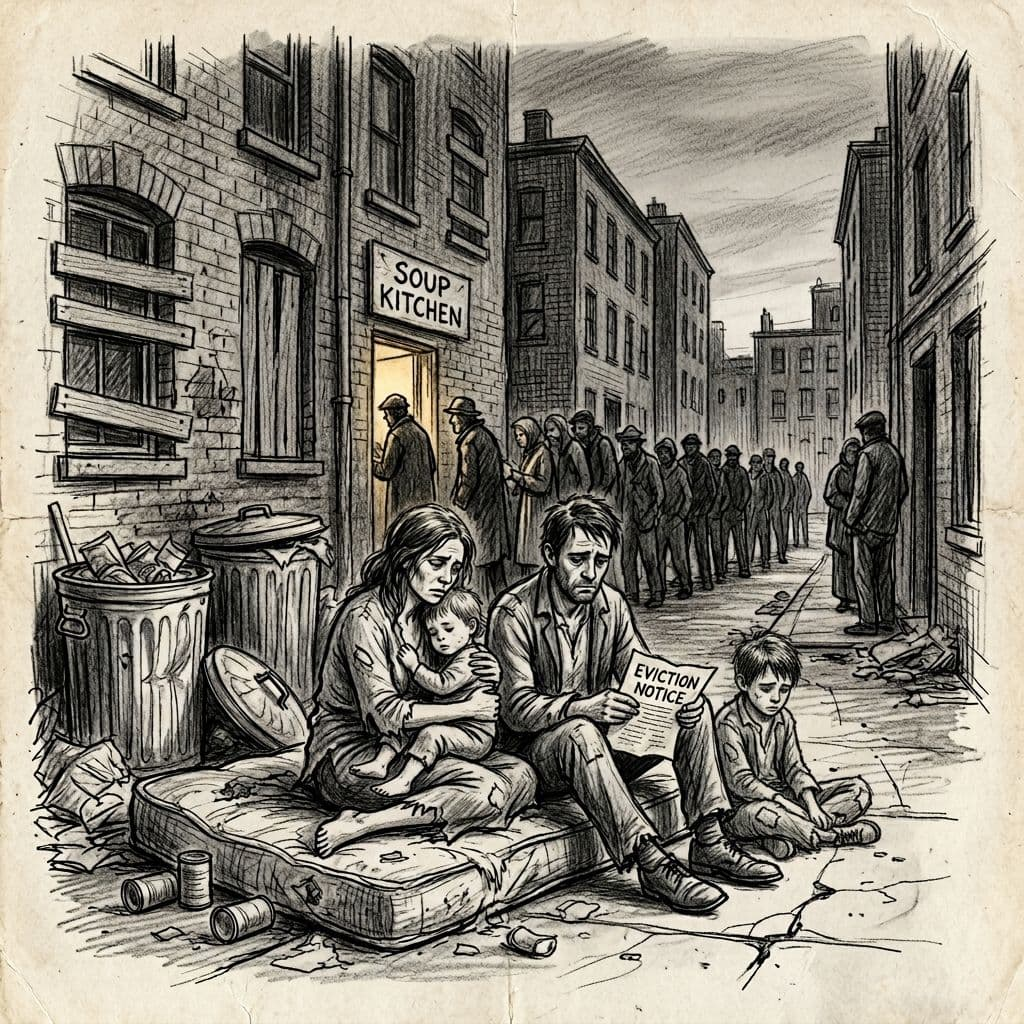
Is Welfare Bankrupting Our Country? What the Budget Data Shows
A lot of people feel welfare is bankrupting the country. The worry makes sense because costs add up fast, and headlines often focus on fraud or “out of control” spending. Still, the real budget picture is more complicated than a single program, or even a single category of spending.
When most people say “welfare,” they’re usually talking about a mix of help for low-income households. That can include cash assistance, food help (like SNAP), health coverage (like Medicaid), housing help, and tax credits that boost paychecks. These programs serve different groups, and they’re funded in different ways, so lumping them together can hide what’s actually driving costs.
This post breaks down what “bankrupting” should mean in plain budget terms, not as a slogan. We’ll look at what the data says about the size and growth of major safety-net programs, how those costs compare to other big parts of the federal budget, and why national debt keeps rising even when the economy grows. We’ll also cover the pressures that push spending up, like health-care prices, aging populations, recessions, and policy choices.
Finally, we’ll talk about what welfare does well (and where it falls short), with a practical focus on results. The goal isn’t to shame anyone, it’s to sort real problems from loud myths. You’ll also see reform ideas that protect kids and taxpayers at the same time, including better work supports, simpler rules, and stronger checks where waste is most likely.
What people mean when they say “bankrupting,” and how government money actually works
When someone says welfare is “bankrupting” the country, they usually mean the federal government keeps spending more than it brings in. That worry points to a real issue, but the words get mixed up fast. A family’s budget can’t print dollars, and it can’t roll over debt forever. The federal government is different, but debt still carries a price.
A simple way to think about it is a bathtub. The national debt is the water already in the tub. The annual deficit is the water flowing in this year. Even if you slow the faucet, the tub can still rise because interest keeps adding water.
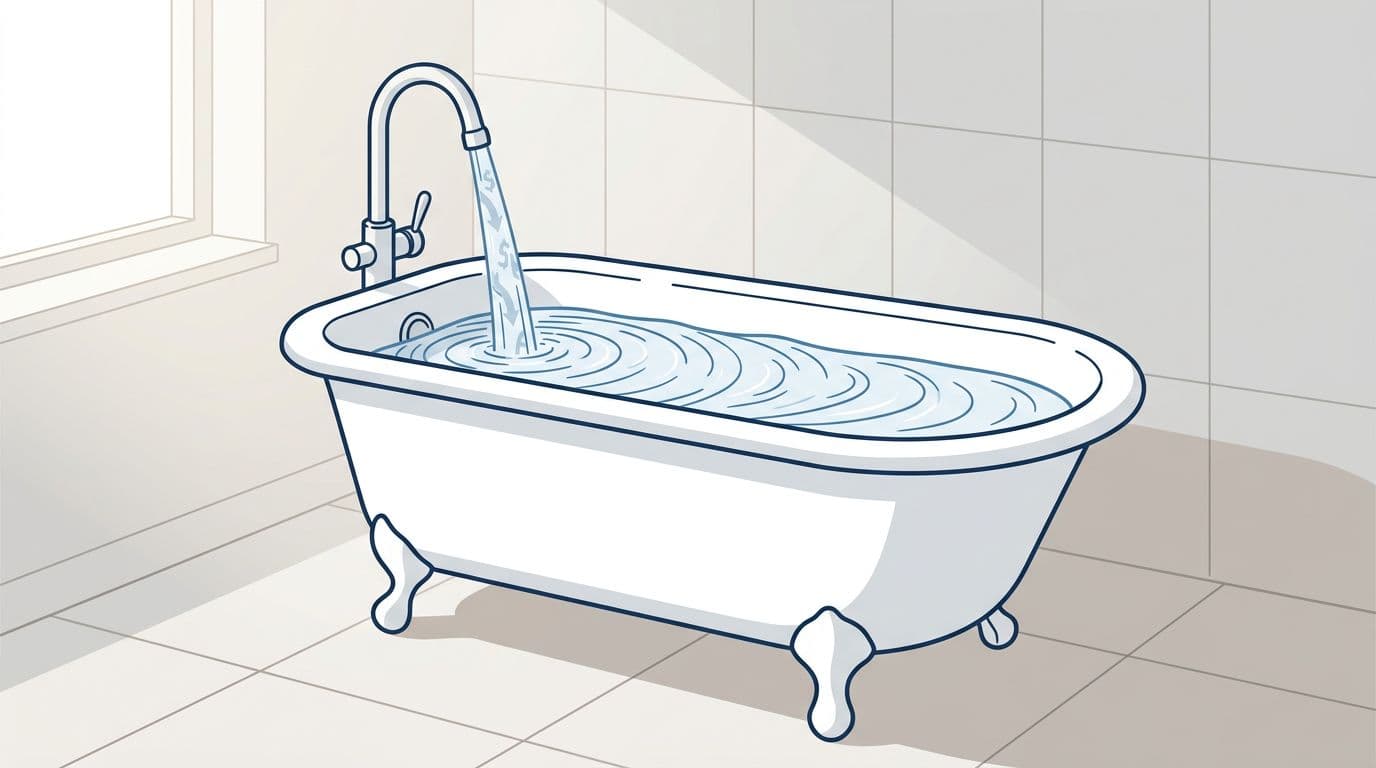 An AI-created illustration showing how deficits add to debt, while interest can keep pushing costs up.
Debt vs. deficit, and why interest payments matter to everyone
The deficit is the gap between what the government collects in taxes and what it spends in a single year. The national debt is the total amount the government has borrowed over time, basically the sum of past deficits minus any surpluses.
Here’s a round-number example that keeps it real. If the government takes in $4 trillion this year but spends $5 trillion, the deficit is $1 trillion. If last year’s debt was $30 trillion, it becomes about $31 trillion (before other accounting details).
Interest is the part many people miss. When debt is large, even normal interest rates can create huge bills. As a result, rising interest payments can crowd out other priorities, including:
- Roads and bridges, because interest gets paid first.
- Schools and job training, especially when budgets get tight.
- Defense and disaster response, because there’s less room for sudden needs.
The tricky part is that interest costs can rise even if program spending stays flat. Rates can go up, and the total debt can grow, so the interest bill grows too. In other words, you can argue about welfare all day, but the interest tab hits everyone.
If you want to know what “bankrupting” looks like in practice, watch the interest line. It’s money that buys no services today, but still has to be paid.
So what counts as “welfare,” and what doesn’t?
People often use “welfare” as a catch-all for help to low-income households. In everyday talk, they usually mean programs like:
- TANF (cash assistance, often tied to work rules)
- SNAP (food benefits)
- Medicaid (health coverage for low-income people and some people with disabilities)
- SSI (cash support for low-income seniors and people with disabilities)
- Housing assistance (like vouchers or public housing support)
However, some of the biggest “help” programs are not always called welfare in debates, even though they support household income or pay major bills. These include Social Security, Medicare, unemployment insurance, and tax credits that boost after-tax pay like the Earned Income Tax Credit (EITC) and the Child Tax Credit (CTC).
This is where arguments go off the rails. One person says “welfare” and means SNAP and TANF. Another person means almost any benefit, including Social Security and Medicare. If you don’t agree on definitions, you won’t agree on the math.
Who pays for welfare programs, and who decides the rules?
Welfare programs are paid for mainly through taxes, plus some borrowing when the overall budget runs a deficit. Federal taxes include income taxes, payroll taxes, and business taxes. States also collect taxes, and they help fund and run many programs.
The federal government sets broad rules for many safety-net programs, but states often manage the details. That’s why benefits and sign-up rules can look different depending on where you live. For example, some programs use matching funds, where the federal government pays part of the cost and the state pays the rest. Medicaid is a well-known case where state choices matter a lot.
Administrative costs are real, because someone has to check eligibility, prevent fraud, and run systems. Still, most program dollars usually go to benefits and services, not office overhead. The bigger drivers tend to be who qualifies, how many people need help in a recession, and the rising cost of health care.
Bottom line: “The government” is not one checkbook. Federal, state, and local budgets interact, and that’s why simple slogans rarely match how the money actually moves.
How big is welfare spending compared to the real drivers of national debt?
If you picture the federal budget as a household, some bills show up every month no matter what. Others swing up and down with the economy. That difference matters, because the biggest debt pressure comes from costs that keep growing on autopilot, especially as the population gets older and interest adds up.
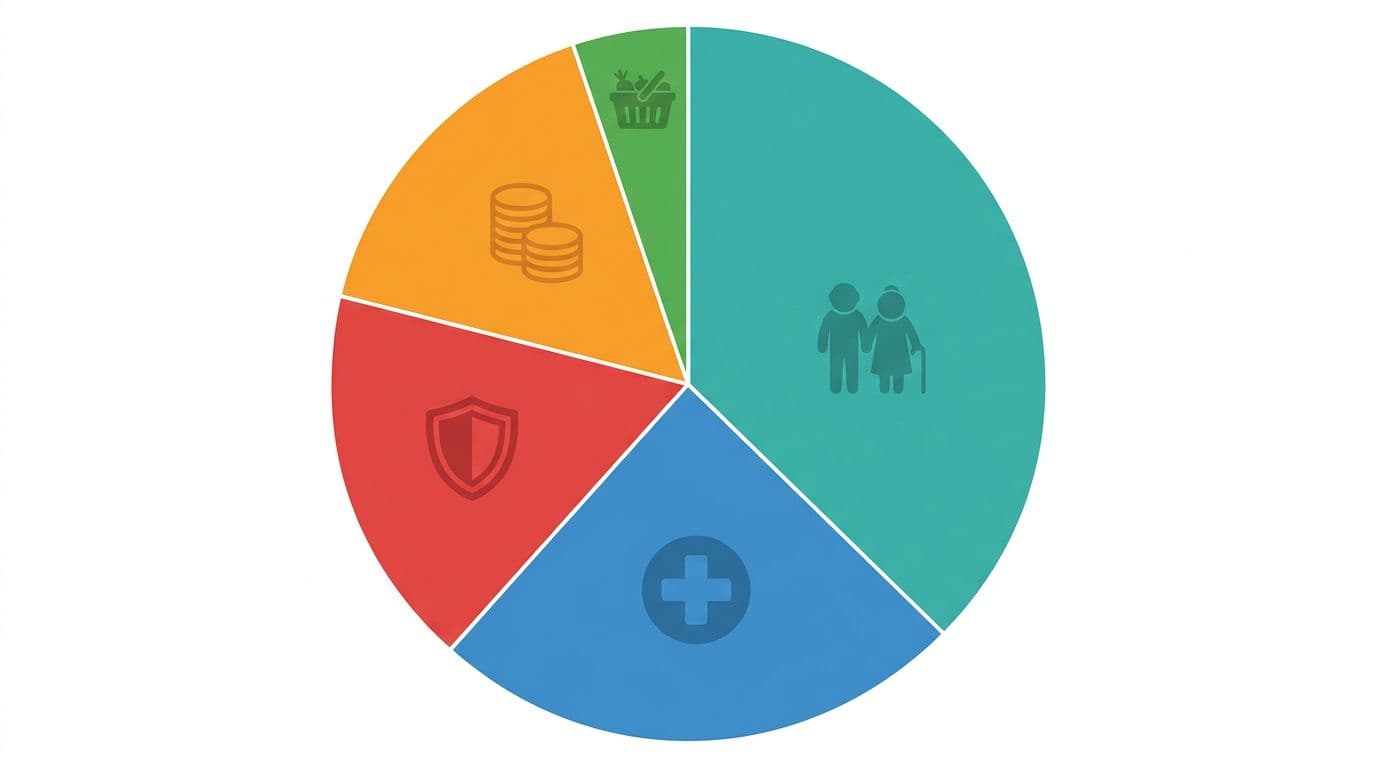 An AI-created visual showing how big budget categories compare at a high level.
In a typical year, Social Security, major health programs, and interest take up a large share of federal spending. Defense is also a major line item. Means-tested aid (the type most people call “welfare”) is real money, but it’s only one slice of the full picture.
To keep this section from going stale fast, stick with broad buckets here, then cite current CBO or OMB tables in the final draft.
The biggest bills: health care, retirement, and interest
 An AI-created illustration showing how aging and health needs can push costs up over time.
The biggest long-run cost pressures are not mystery programs. They come from retirement, health care, and net interest. Think of them like the mortgage, the medical bill, and the credit card interest, they don’t care what your other goals are.
Here’s why these lines tend to grow even when Congress does “nothing”:
- More older adults: As more people retire, more people qualify for retirement and senior health benefits. That grows totals even if benefits per person stay about the same.
- Higher medical prices: Health care prices often rise faster than the overall cost of living. When that happens, public programs feel it.
- More people using services: Older populations use more care. Chronic illness also raises demand for ongoing treatment.
- Compounding interest: When debt is large, interest becomes its own snowball. If rates rise, the bill jumps. If deficits continue, the balance grows, so interest grows too.
None of this means support programs are “bad.” It means budget stress shows up where costs naturally rise. Social Security and Medicare are popular for a reason, they reduce poverty and pay bills that older people can’t avoid. Still, popularity does not change the math.
The hardest part of the budget is that the biggest bills grow even when rules stay the same.
If you want a simple map of the spending landscape, it usually looks like this:
| Big federal spending bucket | What it mainly pays for | Why it tends to grow over time |
|---|---|---|
| Social Security | Retirement and disability checks | More retirees, longer lifespans |
| Medicare and other federal health spending | Health care for seniors and more | Medical prices, higher use, new treatments |
| Medicaid (joint federal state) | Health coverage for low-income people and long-term care | Health prices, more enrollment in downturns, aging and disability care |
| Net interest | Interest on the national debt | Higher debt, higher rates |
| Defense | Military, operations, equipment | Policy choices, global risk, costs of personnel and tech |
| Other | Everything else (roads, research, schools, agencies) | Mix of policy choices and inflation |
The key point is that health and retirement are structural pressures. Interest is the amplifier. Meanwhile, many other programs fight over what’s left.
Means-tested help is only one slice, and it is not all cash
When people argue about “welfare,” they often picture someone getting a check. In today’s budget, a lot of means-tested spending is not cash at all. It’s health coverage, mainly through Medicaid and related health help.
It helps to separate benefits into two types:
- Cash aid: Money people can spend on anything. Examples include parts of TANF and SSI (SSI serves seniors and people with disabilities with low income).
- In-kind benefits: Help earmarked for a specific need. Examples include SNAP (food), housing assistance, and Medicaid (health coverage).
That difference matters because health spending can rise fast without expanding eligibility. Costs can climb because hospitals charge more, drug prices rise, and care gets more complex. Also, even if the rules don’t change, enrollment can move with the economy. When people lose jobs or income, more qualify. Then totals rise.
Medicaid is also tied to long-term care. Nursing home and in-home care are expensive, and many families can’t pay out of pocket for long. So even a program aimed at low-income people ends up paying big medical bills for older adults who run out of savings.
So yes, means-tested programs cost money. Still, calling the whole debt problem “welfare” skips over the big engine: health costs plus aging, with interest stacking on top.
What the numbers miss: poverty, homelessness, and the cost of doing nothing
Budget debates often treat spending cuts like pure savings. In real life, cuts can shift costs instead of removing them. When support falls apart, the bill often lands somewhere else, and it’s usually a more expensive place.
For example, if people lose coverage or can’t get basic care, hospitals still see them in emergencies. That leads to uncompensated care, which can raise costs for everyone. If housing help shrinks and rents rise, cities may spend more on emergency shelter, street outreach, and cleanup. Schools also feel it when kids move often or show up hungry. Police and courts can get pulled in too, especially when untreated addiction or mental illness grows.
Here are a few common “cost shifts” people forget:
- Emergency rooms over primary care: Treating a crisis costs more than preventing one.
- Shelters over stable housing: Short stays and repeat visits add up quickly.
- Local budgets over federal budgets: Counties and cities pick up costs for jails, clinics, and child welfare.
At the same time, waste exists. Some programs are poorly run. Some payments are wrong. It’s fair to demand better oversight and simpler rules that reduce errors.
The honest take is both things can be true: bad spending should be fixed, and support that prevents breakdowns can save money elsewhere. The debt conversation gets better when we count the visible costs and the hidden ones.
Does welfare make people dependent, or does it help them get back on their feet?
Whether welfare creates dependence or supports a comeback depends on how it’s built and what a person is facing. Most people don’t need help forever. They need it when life hits hard, like a layoff, a medical crisis, or a rent jump that wipes out savings.
At the same time, the system can send mixed signals. A program can protect a family from eviction, then punish them for earning a bit more. Another might require constant paperwork that feels like a second job. In other words, welfare can act like a sturdy crutch during recovery, or like a maze that slows people down.
 An AI-created illustration of short-term help during a job loss, followed by a return to stable work.
When welfare works well: short-term help during hard times
The best version of welfare looks like temporary support that prevents a crisis from turning into a collapse. A few months of food assistance can keep the pantry stocked while someone job hunts. A housing voucher can stop an eviction that would otherwise wreck a family’s stability. Health coverage can keep an injury from becoming a debt spiral.
Those spirals are real, and they move fast. Once someone loses housing, it’s harder to keep a job. Once bills go to collections, it’s harder to rent an apartment. If a parent skips care because of cost, a small problem can become an ER visit later.
Here’s what short-term help often prevents:
- Eviction and homelessness, which can trigger job loss and school disruption.
- Hunger, which makes it harder for kids to learn and adults to work steady hours.
- Medical debt, which can follow people for years and block basic steps like moving.
This is also why welfare use often rises in recessions. When layoffs hit, more people qualify. Then, as the job market improves, many households move off benefits. Unemployment insurance is the obvious example, but other programs also act like shock absorbers when paychecks vanish.
Consider a warehouse worker laid off when orders drop. They might use SNAP for a short stretch, keep Medicaid for their kids, then drop assistance once they’re hired again. That’s not dependence, it’s a bridge across a gap.
When support arrives early, it can stop a temporary setback from becoming a long-term mess.
Still, outcomes vary a lot by place. A strong local job market, affordable child care, and stable housing make it easier to bounce back. When rent is sky-high or jobs are scarce, even motivated people can struggle to regain footing.
Where the system can go wrong: cliffs, paperwork, and weak incentives
A common problem is the benefit cliff. In plain English, it means this: you earn a little more, but you lose a lot of help. That can happen when benefits phase out all at once instead of gradually. The result is that a raise or extra shifts can leave someone worse off for a while.
For example, a single parent might get offered a small pay bump, but then lose child care help. If the new pay doesn’t cover the full cost of care, they may have to turn down hours or quit. That’s not laziness, it’s math.
 An AI-created metaphor showing how a small income gain can cause a sudden loss of support.
Paperwork is another big issue. Many programs require frequent recertification, income checks, and documentation that changes month to month. People working unstable schedules can miss deadlines or appointments. As a result, benefits can stop even when someone still qualifies, then restart later after a scramble. That churn creates stress and can push families into late fees, missed rent, and skipped meals.
Errors happen on both sides:
- Overpayments, where someone gets too much and later has to pay it back.
- Underpayments or wrongful denials, where eligible people lose help due to missing forms or system mistakes.
Fraud exists, and it should be addressed, because it hurts trust and wastes money. Still, focusing only on fraud misses the bigger daily problem: administrative complexity. A system can waste millions simply by being hard to understand and hard to comply with, even for honest people trying to follow the rules.
If the goal is helping people move forward, the cleanest fix often isn’t a harsher rule. It’s simpler rules, smoother phase-outs, and fewer paperwork traps.
Work requirements and time limits: what they can fix, and what they can break
Supporters of work requirements and time limits make a fair point: tying benefits to work can encourage job entry, reduce long-term program use, and strengthen public trust. Taxpayers want to know help has a purpose, not an open-ended promise. Clear expectations can also help some recipients stay connected to the labor market.
However, the risks show up when policy ignores how work actually looks for many people. Lots of jobs offer unstable hours. Many workers get schedules a week at a time. If the rule requires a fixed number of hours every month, a person can lose benefits even while working.
The same goes for people facing real barriers, such as:
- Caregivers, including single parents who can’t find affordable child care.
- People with disabilities or chronic illness, especially when symptoms vary by week.
- Rural workers, where jobs and transit options are limited.
- People in seasonal work, where hours swing with the calendar.
Time limits can also cut the wrong way during a weak economy. When there are fewer jobs, strict limits don’t create work, they just remove support.
A better approach is supportive requirements, where the system asks for progress and helps people make it. That usually means pairing expectations with practical tools, such as job training, placement help, reliable child care, and transportation support. If a policy only punishes, it often increases instability. If it builds a path, more people can actually meet the standard.
In the end, dependence is not just about personal choice. It’s also about whether programs reward progress, smooth the climb, and make work pay in the real world.
The real cost problem: why programs feel expensive even when benefits are modest
A lot of safety-net benefits look modest on paper. A grocery benefit helps, but it does not cover every meal. A housing voucher can take years to get. Medicaid keeps the lights on at the doctor’s office, but it does not make health care cheap.
So why does the total price tag feel so big? Because the biggest cost drivers often sit outside the welfare office. When rent, medical care, and basic living costs rise faster than paychecks, more people qualify, and more people stay eligible longer. The programs did not suddenly become generous, the economy around them got harsher.
When the cost of basics climbs, the safety net starts catching more people, even if each person gets only a small lift.
Housing costs push families to the edge, then the safety net has to catch them
 An AI-created image of a family feeling squeezed by a high rent bill at home.
When rent jumps, families don’t need to “mismanage” anything to fall behind. A single surprise, a cut in hours, a car repair, a sick kid, can turn a tight budget into an eviction notice. As a result, rising rent doesn’t just change where people live, it changes how many people need help staying housed.
A big reason rent rises is simple supply and demand. In many places, there just aren’t enough homes and apartments. Building is slow, and local rules can make it slower. Zoning often limits what can be built, like allowing only single-family homes in large areas. Even when a project fits local plans, neighbors may fight it, permits can take months, and fees add cost. Each barrier means fewer units, therefore higher prices.
Once housing gets scarce, homelessness risk climbs. Then demand rises for:
- Rental assistance, like vouchers or short-term help to stop an eviction.
- Supportive housing, for people who need both a home and services.
- Emergency shelter beds, when nothing else is available.
Here’s the budget punchline: crisis care costs more than stability. Emergency shelters, street outreach, hospital visits tied to homelessness, and public safety responses are expensive. Stable support, even if it looks like “paying someone’s rent,” often costs less than repeatedly cleaning up the fallout of housing loss. In other words, when housing markets break, government doesn’t avoid the bill, it just pays it in the most expensive way.
Health care prices are a budget monster, and Medicaid sits in the middle
 An AI-created image showing the high cost pressure of medical bills and long-term care.
People often assume Medicaid is mostly for low-income kids and parents. That’s part of the story. Still, Medicaid also pays for many people with disabilities and a large share of long-term care, including nursing homes and in-home support. That surprises a lot of readers because it doesn’t match the stereotype of “welfare.”
The bigger issue is not that patients are “using too much.” The issue is that health care in the United States is pricey at almost every step. When hospitals charge more, when drugs cost more, and when long-term care runs thousands per month, the program in the middle gets the bill.
Medicaid costs rise for a few plain reasons:
- Hospital prices and fees: A short stay can cost a fortune, even before tests.
- Prescription drugs: New medicines help people, but prices can be tough.
- Long-term care: Bathing, dressing, and daily help is labor-heavy, so it’s costly.
- More people living longer with complex needs: Better survival also means more ongoing care.
For families, long-term care is the most common “financial cliff” in health. A person can spend down savings fast, then qualify for Medicaid. That is why Medicaid can look like a poverty program but function like a backstop for middle-class seniors, too.
Budget debates often blame the program because it’s visible on the ledger. However, high health care prices are the engine. If the same services cost less, Medicaid spending would look very different.
Low wages and unstable work make more people eligible for help
 An AI-created image of a worker dealing with unpredictable schedules and pay.
A lot of people picture welfare as something separate from work. Real life is messier. Many recipients already work, or they rotate in and out of jobs as hours change. If pay is low and local costs are high, a full-time job can still land a family under the line for help.
Unstable work makes the problem worse. Many jobs don’t offer steady schedules. Hours can change week to week, shifts can get canceled, and income can swing hard. Gig work adds another layer, because pay depends on demand and expenses (gas, car repairs, phone bills) eat into earnings.
Lack of paid sick time is another quiet driver. When a worker gets the flu, they may lose income right when they need it most. Miss enough days, and they can lose the job. Then the safety net has to cover a bigger gap than it would have with a few paid days off.
This is why program rolls can grow quickly in certain regions. Areas with lower wages, seasonal work, or higher housing costs tend to see more eligibility. After economic shocks, enrollment rises because people’s incomes drop fast, while bills keep coming. Even when the economy improves, people may stay eligible if rents and health costs don’t cool down.
The practical takeaway is simple: benefits can stay modest, while total spending climbs, because more households get pulled into the current. Fixing the cost problem often means reducing the pressure upstream, housing supply, health care pricing, and job stability, not just tightening the net after people fall.
What smart reform looks like: protect taxpayers, reduce waste, and help people move forward
If welfare spending feels out of control, the fix is not blunt cuts. Smart reform treats the safety net like any other big system: tighten the pipes where money leaks, and widen the path where people can stand on their own sooner. That means fewer bureaucratic traps, fewer mistakes, and more policies that reward work and stability.
 An AI-created image of a parent and child moving from benefits toward work and training.
A few principles help keep reforms grounded, especially for skeptical readers who want proof, not slogans:
- Simple rules that reduce errors and cut admin cost.
- Strong work supports so more earnings actually help families.
- Protect kids, seniors, and people with disabilities, because they have the least room for shocks.
- Measure outcomes, then fund what works and fix what doesn’t.
Make it easier to work more without losing everything overnight
Benefit cliffs are the hidden tax nobody voted for. When help drops off all at once, a small raise can trigger a big loss. The result is predictable: people hesitate to take extra shifts, or they churn on and off programs as their pay bounces around.
A smarter design uses smoother phase-outs. Instead of a hard cutoff, benefits step down gradually as income rises. Two practical tools show up again and again in good reform plans:
- Earnings disregards: Let recipients keep part of new earnings without an immediate benefit cut, especially early in the climb.
- Transitional benefits: Keep key supports (like child care or health coverage) for a set period after someone’s income rises, so a new job sticks.
Administration matters too. Right now, families often deal with multiple agencies, each with separate forms and deadlines. That creates mistakes, and it also creates cost. A more workable approach includes combined applications and real coordination across programs, so a change in income updates multiple benefits at once.
Simpler reporting helps as well. If someone’s hours vary week to week, monthly paperwork becomes a trap. Using clearer rules, fewer check-ins for stable cases, and better wage data matching can reduce both overpayments and wrongful terminations.
The goal is simple: make work pay every month, not just on paper.
Over time, smoother phase-outs can reduce spending because more people move to higher earnings and stay there. Higher income means fewer benefits, more payroll taxes paid, and less crisis spending when families fall behind.
Spend on proven supports, and stop paying for red tape
If the point is fewer people needing help long term, then spend less on paperwork and more on what gets results. Three supports consistently show up as practical barriers to work: skills, child care, and getting to the job.
Start with job training, but keep it grounded. Training should tie to real local openings, not generic classes that look good in a brochure. That means partnerships with community colleges, employers, and unions, with clear pipelines into jobs that actually hire.
Next comes child care. For many parents, it’s the hinge that decides whether work is possible at all. Child care help is not just a “nice to have” for work policy, it’s often the difference between steady hours and constant job churn.
Transportation is the third leg. A reliable car repair fund, a bus pass, or a vanpool option can be cheaper than months of benefits triggered by missed shifts.
On the cost control side, a lot of waste comes from red tape and repeated paperwork. Every extra form adds staff time, mailing costs, call center volume, and error risk. Better systems reduce that load:
- Use data matching across agencies to verify income and household info, so people don’t have to prove the same fact five times.
- Reduce duplicate recertifications when information hasn’t changed.
- Flag high-risk cases for review, instead of treating every family like a suspected fraud case.
Finally, measure what matters. Track outcomes like employment stability, earnings growth, housing stability, and reduced emergency room use. If a program can’t show improvement, it should change. If it works, it should scale.
Go after the biggest cost drivers: health prices, long-term care, and housing supply
If the country wants real debt relief, it can’t only debate small programs. The biggest pressure comes from big-ticket areas that compound over time, especially health costs, long-term care, and housing shortages.
 An AI-created image showing housing construction and home-based care, two major cost drivers.
Health savings often sound abstract until you name the mechanics. Costs rise when the same service gets billed at higher prices, or when billing adds layers that don’t improve care. Practical options focus on reducing what gets paid for, not denying necessary care:
- Set clearer limits on certain high prices paid by public programs when they don’t reflect real costs.
- Reduce unnecessary billing and duplicate testing through stronger claim checks and better prior authorization for high-cost services.
- Reward providers for outcomes that cut repeat hospital visits, especially for chronic conditions.
Long-term care is the slow-moving budget wave. Nursing homes are expensive, and many people eventually need help with daily tasks. Supporting home-based care can save money over time because it often costs less than full-time institutional care. It also keeps people safer and closer to family, which can reduce crisis episodes that lead to hospital stays.
Housing supply is the other major driver. When there aren’t enough homes, rent climbs, and more families qualify for help. Even worse, housing instability creates expensive downstream costs like shelter use, ER visits, and school disruptions. Over time, building more housing and removing bottlenecks can reduce the number of households that need ongoing assistance just to stay housed.
Protect the safety net for kids, seniors, and people with disabilities
Blunt cuts hit the wrong targets first. Kids can’t earn more hours. Many seniors live on fixed incomes. People with disabilities often face limits that no amount of “tough love” changes. When these groups lose support, the result is rarely savings, it’s more crises and higher costs elsewhere.
A better approach is targeted oversight, not broad reductions. That means protecting core benefits while tightening eligibility checks where mistakes are most likely. It also means making the system easier to use correctly, so fewer eligible families fall through the cracks.
Practical safeguards include regular, routine accountability:
- Program audits on a schedule, with public findings and clear fixes.
- Clear eligibility checks that focus on verification, not paperwork games.
- Help lines and case support that prevent errors, reduce appeals, and cut wrongful denials.
Oversight should also target the biggest dollars and the biggest opportunities for billing abuse, especially in health care services and contracted systems. When enforcement focuses on high-value risks, taxpayers get real protection without punishing families who follow the rules.
The safety net works best when it’s a bridge, not a trap. Smart reform keeps that bridge strong for the people who truly need it, while making it easier for everyone else to walk off it and not look back.
Conclusion
“Welfare is bankrupting our country” sounds simple, but the budget story isn’t. The debt problem is mostly about persistent deficits that pile onto the national debt, then interest turns that pile into a growing bill. On top of that, health-care prices keep rising, and an aging population means more people need retirement and medical support. Meanwhile, what many people call welfare includes a lot of non-cash help, especially Medicaid and long-term care, so totals can climb even when day-to-day benefits feel modest.
Still, the public concerns are real. People want a system that’s fair, discourages long-term dependency, and doesn’t reward bad behavior. They also want fraud and billing abuse addressed, because trust matters. At the same time, blunt cuts can backfire when they push costs into ER visits, shelters, and local budgets. The better target is the design flaws that trap people, like benefit cliffs and endless paperwork, plus the upstream costs that pull more families into need.
So here’s the next step. Ask for clear definitions of “welfare,” then insist on current budget tables (CBO and OMB) before anyone claims a single program caused the debt. After that, push reforms that smooth cliffs, cut red tape, and focus oversight where the biggest dollars flow. Most importantly, demand serious work on health prices, long-term care, and housing supply, because that’s where the pressure keeps building.
Thanks for reading, what reforms would you support that protect taxpayers and still keep families stable when life hits hard? A strong safety net and strong finances can coexist, but only if we design policy for results, not slogans.